It is without a doubt in mind that my support is my husband . As I look at my husband being a supportive factor in my life, I can describe him as being a tower of strength to me. He has always been beside me giving me encouraging words as it relates to emotional, physical, social well being and most important financially. The benefits for having these supports are indeed of utmost importance and vital to my life as an independent individual because in life one can be faced with numerous challenges that might be more than what he or she can manage independently. Therefore, its a joyous feeling to know that you can have someone to share your needs and desires with that can give you encouraging words to build your self- esteem and confidence. However, without having these supports I can truly say that it would be very challenging as well as confusing not knowing what to do at times because there comes a point in life wherein you are faced with situations wherein you just don't know what to do inorder to find a suitable solution. Therefore, I would not even want to think about what impact it would have if he was not around.
The challenge that I chose to imagine is being a single- parent. I| personally think that it would be a very big challenge for me because at times it is rather challenging to be a mom, teacher, wife and additional chores. In having my husband around as a supportive factor, everything is balanced as we share chores, ideas to accomplish dersired needs and want. This I must say is very beneficial.
Saturday, 15 June 2013

Saturday, 1 June 2013
My Connections to Play
Quotes on play
"Play is our brain's favorite way of learning."(Diane Ackerman)-Contemporary American author)
"Children need the freedom and time to play. Play is not a luxury. Play is a necessity."- (Kay Redfield Jamison)-Contemporary American professor of psychiatry
I can definitely recall as a child growing I loved playing with dolls pretending to be a teacher and mom at all times. Secondly, I like riding bicycles around the block and at the park with my neighbors on the weekends.

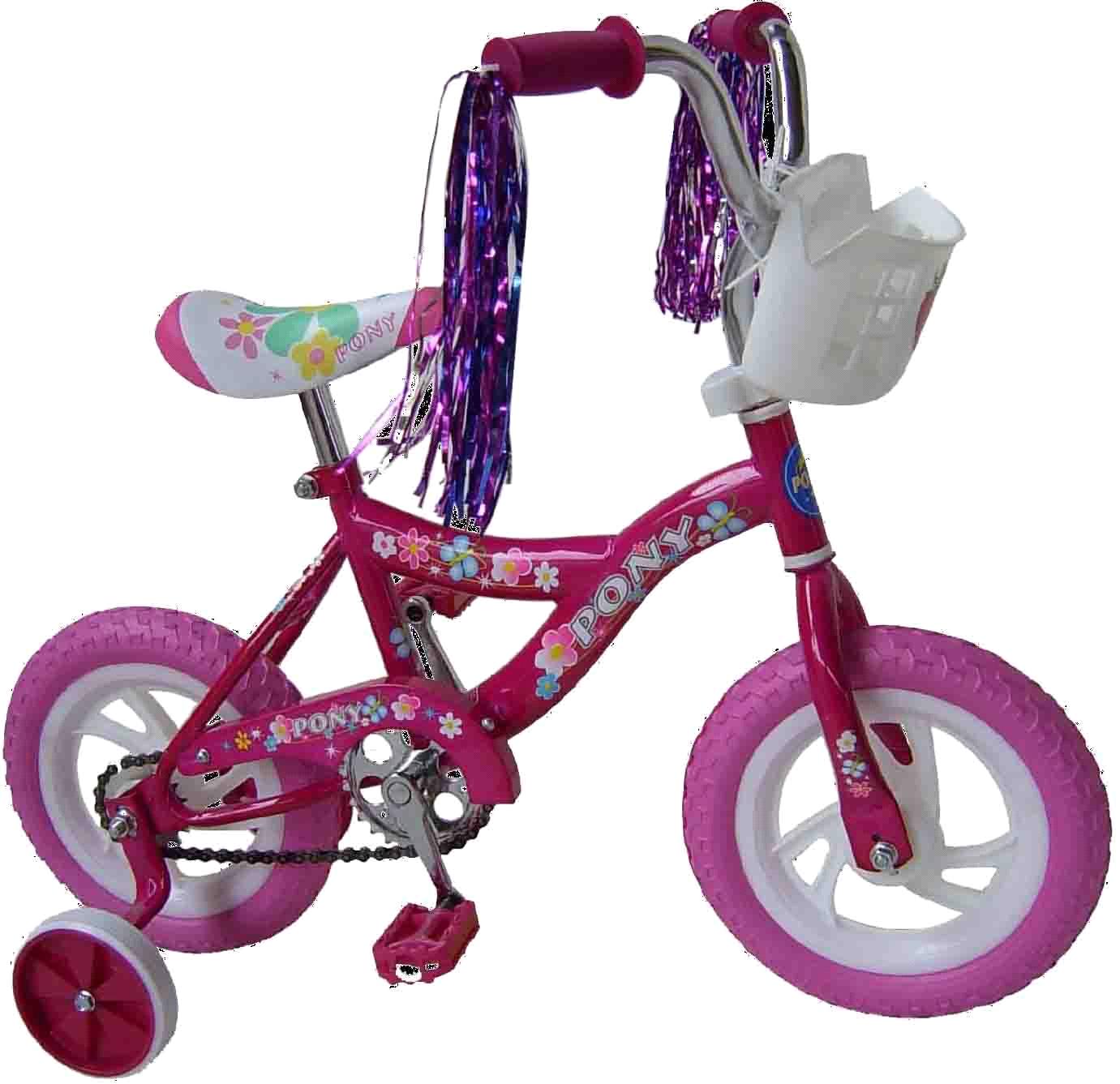
During my childhood days I can recall being engaged in play activities a lot both in and out of my home environment. I can remember my mom bought a big chalkboard for my sister and I to play with and we would use it to pretend teaching one another. We also used it to teach our dolls and plants at home. We were allocated a lot of playtime experiences. At school we were given a lot of opportunity to play both in and out of the classroom environment. Play activities were sometimes planned by my teacher and sometimes we were just allowed free play session wherein we did anything that we felt like doing with our friends. Therefore, I can truly say that play was fully supported by both my family members and educators as a young child growing up.
As it relates to play today, I have observed that not everyone supports it. Some people believe that the children are just running up and down and making noise. I also have observed that even at some schools the whole process of play is ignored and children are exposed to a structured setting of learning, they are not given the opportunity to express and socialize through play as they would have like to at all. I therefore, can strongly say that the whole process of play today is totally different to what I was exposed to as a child. However, I strongly hope that everyone that is involved in interacting with children on a daily basis be educated about the important of play towards the growth and development of their children because through play children are capable of learning skills that no one else can teach them. This is simply because play is self-oriented and intrinsically motivated that unfolds naturally from within.
My thoughts as it regards to the role of play throughout life is that it is very essential towards the development of domains for example brain development which is very crucial in everyone lives. Therefore, I strongly believe that it should be exercised throughout one's life leading into adulthood.
Saturday, 18 May 2013
Relationship Reflection
" No man is an island and definitely no man stands alone."
Relationship/ partnership is indeed of great importance to me because through building a good relationship/ partnership I am able to create atmospheres that are conducive for both myself, family and friends to feel comfortable, loved and cared for at all times. In postulating good and effective relationship/partnership it aids in effective communication that is a key opponent in maintaining a high level of trust and reassurance within a relationship. Therefore, my family is very important to me as they are my driving force that encourages me each day to stay level headed to attain my desired goals and aspirations in life.

My husband, my motivator and best friend

My mom, my counsellor

My sister, my motivator
Relationship/ partnership is indeed of great importance to me because through building a good relationship/ partnership I am able to create atmospheres that are conducive for both myself, family and friends to feel comfortable, loved and cared for at all times. In postulating good and effective relationship/partnership it aids in effective communication that is a key opponent in maintaining a high level of trust and reassurance within a relationship. Therefore, my family is very important to me as they are my driving force that encourages me each day to stay level headed to attain my desired goals and aspirations in life.

My husband, my motivator and best friend

My mom, my counsellor

My sister, my motivator
I uphold a very positive and strong relationship with my family. They are always there for me both in the good and bad times. They are always there empowering me and in return I do the same for them at all times. In regards to my relationship with my husband, it is one that is very open, honest. Factors that contribute to our lives is that we try to uphold a an effective communication process wherein we do not feel inferior to express ourselves within a positive and humble manner at all times. While for the relationship with my mother and sister, we try to ensure that the process of communication is fully exercised as through this process we are capable of attending to each others needs at all times.
In life we are not promised that everything will run smoothly because there must be a point in time wherein we are challenged. Therefore, the challenges that I have experienced over a period of time in developing and maintaining a relationship/partnership is that we are all separate individuals that were born uniquely in our own ways, therefore, at times we may disagree on certain situations but we have learned to compromised and be just in our decision makings so that at the end of each matter that arises the solutions made displays some form of equality wherein everyone has a mutual understanding towards what has occurred.
Some characteristics of these relationships that helps to make them partnership are:-
- People pleasing is kept to a minimum and neither one feels they are making a "great sacrifice" to stay in the relationship. Each person is able to do their work, attend to their children, care for other aspects of their life without threatening the relationship.
-
Partners can hear feedback from each other that they may be projecting old relationship fears or issues onto the current relationship.
-
There is commitment: exits are blocked in the relationships.
-
There is unconditional love if not unconditional agreement.
-
The relationship feels and is nuturing, comfortable,and fun.Finally, my experiences with relationship/partnership can impact my work as an early childhood professional as I have learned from my experience that communication is the most effective and important aspect of a relationship/ partnership that has to be executed to maintain balance in the program that work each day. Through the process of communication i am able to give meaning feed backs to both children's parents/guardians, administrators as well as gain insights for myself to plan and implement strategies to help in the growth and development of the children in which I interact with each day.
Friday, 26 April 2013
Thanks
At this time I must say, a big thank you to my colleagues for all the support that you have granted unto me throughout the past weeks. Indeed they have been a tower of strength to me. Whenever I was feeling down your words kept on occurring in my mind. Special thanks to Magda and Becky. I have enjoyed reading your posts and feed backs that you both have given to me.
Quote about children
“Your children are the greatest gift God will give to you, and their
souls the heaviest responsibility He will place in your hands. Take
time with them, teach them to have faith in God. Be a person in whom
they can have faith. When you are old, nothing else you've done will
have mattered as much.”
By Lisa Wingate
By Lisa Wingate
Saturday, 13 April 2013
Testing for Intelligence
Assessment is the process of identifying, gathering and interpreting
information about students' learning. The central purpose of
assessment is to provide information on children's achievement and
progress and set the direction for ongoing teaching and learning.Assessment provides information for those involved in the teaching and
learning process to compare what is known and can be demonstrated
against standards.
I strongly believe that children should be assessed has it gives educators, caregivers the opportunity to know the level at which the children they will be interacting with on a daily basis are as well as to plan effectively for them to meet their needs.
In Germany,the main differences between the German Education system and the North American and Anglo-Saxon systems, are at the level of high school.
Although all children start school at the age of 6 and attend the elementary school called Grundschule in German, by the age of 10 they are separated into 4 different kinds of what we will call secondary school.
Therefore, German children spent only the first 4 years together in the German education system. Afterwards, they, with their family, must decide the type of secondary school that they will attend. It seems incredibly young to have to make such a choice and so, it is usually the parents that decide the direction of the child's education.
There is talk in Germany to abandon such a system, but nothing as been done yet.
Depending on the academic talent of the child and the wishes of the parents; s/he will attend:
Hauptschule (grade 5 to 9, some schools have also grade 10). For the "manually" inclined they receive the same basic education as at the other secondary school, but at a slower pace and with "hands-on" experience. This usually leads to Vocational training, either full time or part-time, until the age of 18.
Realscule (grade 5 to 10 in most states). This school too leads to full time or part-time Vacational training, but also to higher vocational training at a Berufschule. It is now possible for high achieving students to switch to the Gymnasium after completing grade 10.
Gymnasium (grade 5 to 13 in most states). This is the school for academically-minded children. It leads to University, or to a combination of academic courses and vocational credits. There are also different fields of education in the Gymnasium, mainly: math and natural science, classical languages and modern languages.
There is a fourth kind of secondary school in some states of Germany:
Gesamtschule (grade 5 to 9 or 10). It is a combination of Hauptschule and Realschule, and, depending if the child finishes in grade 9 or in grade 10, he or she will receive either the Hauptschule or the Realschule certificate respectively.
Every child in Germany must complete at least 9 years of education. Those who drop out of Gymnasium must enroll either in the Hauptschule or in the Realschule. After what, it is either work, more education in the Berufschule, the Fachoberschule or the preparatory classes for University or college.
By the age of 18, all students should have finished their secondary school. There are now no more obligatory Army service for young men in Germany.
Another very important point: German children attend school ONLY in the morning and therefore, there is no lunch and usually no after-school services either. So, if both parents work, the child has to go to a sitter for the afternoon. Other points: there is a lot more homework and very few after-school activities.
BUT, things are changing in education in Germany and new laws are being introduced. So, now, in some Lands (states), school hours have been extended and your kid's school might be open from early in the morning to 5pm in the afternoon! No more freebies for the students!
The school system is free at all levels, except at the University level, where a small fee (about 500 euros per semester) is now required. See below for more details on Universities.
For the very young ones, from three to six years of age, there are Kindergartens; some are public, some are religious and others are private. Most of them are similar to North American Kindergartens but once again, most are open only during morning hours, from around 7H30 am to 2H00 pm (some earlier, some later).
Another type of Kindergarten offered in Germany is the Waldkindergarten or forest Kindergarten. There are about 700 of them throughout Germany and they are becoming more and more popular.
In these Waldkindergartens, the children spent their whole morning (usually from 9H00 am to 1H00 pm) in the forest, outside, discovering their surroundings in a natural setting. There is of course a trailer or a small house on site for the extreme weather, but most of the time they are outside, rain or shine.
It has been shown that the kids attending these pre-schools are less aggressive, have more imagination, are better at concentrating and communicating. They are also more aware of their natural surrounding, more connected to what some may see as to the "real" world. In this age of computer and rising number of juvenile obesity, these pre-schools offer a more physically active alternative to the common ones of indoor seating. And some are being open out-side of Germany and the Scandinavian countries, such as in USA and Scotland. In fact, they are becoming more popular among parents who are environmentally conscious and worried about their kids not doing enough physical activities in the "normal"indoor pre-school programs.
Retrieved April 12,2013 from http://www.journey-to-germany.com/education.html
I feel so elated to have found out so much about Germany's way of assessing children. I always have maintained the belief that assessing children aids in the development of their individual skills and morals.
I strongly believe that children should be assessed has it gives educators, caregivers the opportunity to know the level at which the children they will be interacting with on a daily basis are as well as to plan effectively for them to meet their needs.
In Germany,the main differences between the German Education system and the North American and Anglo-Saxon systems, are at the level of high school.
Although all children start school at the age of 6 and attend the elementary school called Grundschule in German, by the age of 10 they are separated into 4 different kinds of what we will call secondary school.
Therefore, German children spent only the first 4 years together in the German education system. Afterwards, they, with their family, must decide the type of secondary school that they will attend. It seems incredibly young to have to make such a choice and so, it is usually the parents that decide the direction of the child's education.
There is talk in Germany to abandon such a system, but nothing as been done yet.
Depending on the academic talent of the child and the wishes of the parents; s/he will attend:
Hauptschule (grade 5 to 9, some schools have also grade 10). For the "manually" inclined they receive the same basic education as at the other secondary school, but at a slower pace and with "hands-on" experience. This usually leads to Vocational training, either full time or part-time, until the age of 18.
Realscule (grade 5 to 10 in most states). This school too leads to full time or part-time Vacational training, but also to higher vocational training at a Berufschule. It is now possible for high achieving students to switch to the Gymnasium after completing grade 10.
Gymnasium (grade 5 to 13 in most states). This is the school for academically-minded children. It leads to University, or to a combination of academic courses and vocational credits. There are also different fields of education in the Gymnasium, mainly: math and natural science, classical languages and modern languages.
There is a fourth kind of secondary school in some states of Germany:
Gesamtschule (grade 5 to 9 or 10). It is a combination of Hauptschule and Realschule, and, depending if the child finishes in grade 9 or in grade 10, he or she will receive either the Hauptschule or the Realschule certificate respectively.
Every child in Germany must complete at least 9 years of education. Those who drop out of Gymnasium must enroll either in the Hauptschule or in the Realschule. After what, it is either work, more education in the Berufschule, the Fachoberschule or the preparatory classes for University or college.
By the age of 18, all students should have finished their secondary school. There are now no more obligatory Army service for young men in Germany.
Another very important point: German children attend school ONLY in the morning and therefore, there is no lunch and usually no after-school services either. So, if both parents work, the child has to go to a sitter for the afternoon. Other points: there is a lot more homework and very few after-school activities.
BUT, things are changing in education in Germany and new laws are being introduced. So, now, in some Lands (states), school hours have been extended and your kid's school might be open from early in the morning to 5pm in the afternoon! No more freebies for the students!
The school system is free at all levels, except at the University level, where a small fee (about 500 euros per semester) is now required. See below for more details on Universities.
For the very young ones, from three to six years of age, there are Kindergartens; some are public, some are religious and others are private. Most of them are similar to North American Kindergartens but once again, most are open only during morning hours, from around 7H30 am to 2H00 pm (some earlier, some later).
Another type of Kindergarten offered in Germany is the Waldkindergarten or forest Kindergarten. There are about 700 of them throughout Germany and they are becoming more and more popular.
In these Waldkindergartens, the children spent their whole morning (usually from 9H00 am to 1H00 pm) in the forest, outside, discovering their surroundings in a natural setting. There is of course a trailer or a small house on site for the extreme weather, but most of the time they are outside, rain or shine.
It has been shown that the kids attending these pre-schools are less aggressive, have more imagination, are better at concentrating and communicating. They are also more aware of their natural surrounding, more connected to what some may see as to the "real" world. In this age of computer and rising number of juvenile obesity, these pre-schools offer a more physically active alternative to the common ones of indoor seating. And some are being open out-side of Germany and the Scandinavian countries, such as in USA and Scotland. In fact, they are becoming more popular among parents who are environmentally conscious and worried about their kids not doing enough physical activities in the "normal"indoor pre-school programs.
Retrieved April 12,2013 from http://www.journey-to-germany.com/education.html
I feel so elated to have found out so much about Germany's way of assessing children. I always have maintained the belief that assessing children aids in the development of their individual skills and morals.
Saturday, 30 March 2013
Poverty
Poverty can be deemed as the state of one who lacks a certain amount of material possessions or money. It is also a condition of having little or no money, goods, or means of support; condition of being poor (poverty.com).
As a child growing up I remember having a friend whose family could barely afford to provide for their children's needs. Often times I could remember her coming to school without getting anything to eat. It was so heart rending at times to see her going through so much pain. As her friend we tried to help her by giving her some of our lunch to eat but that was not sufficient at all because at the end of the day she would be going home not sure if dinner was prepared for her. After a period of time my teacher started to assist her and her family with the little she had and I can recall my friend saying that she felt much better and has less pain in her stomach because she was now able to get even a cup of tea with some crackers to eat before going to bed at nights. She was also put on the breakfast feeding program that the school implemented to assist children who had nothing to eat in the mornings.
About 25,000 people die every day of hunger or hunger-related causes, according to the United Nations. This is one person every three and a half seconds, as you can see on this display. Unfortunately, it is children who die most often.
Yet there is plenty of food in the world for everyone. The problem is that hungry people are trapped in severe poverty. They lack the money to buy enough food to nourish themselves. Being constantly malnourished, they become weaker and often sick. This makes them increasingly less able to work, which then makes them even poorer and hungrier. This downward spiral often continues until death for them and their families.
There are effective programs to break this spiral. For adults, there are “food for work” programs where the adults are paid with food to build schools, dig wells, make roads, and so on. This both nourishes them and builds infrastructure to end the poverty. For children, there are “food for education” programs where the children are provided with food when they attend school. Their education will help them to escape from hunger and global poverty.
Retrieved on March29,2013 from Hunger and World Poverty Sources: United Nations World Food Program (WFP), Oxfam, UNICEF.
Poverty in Europe
The European Commission has warned that eurozone countries are drifting
apart: An ever-declining south is facing a relatively stable north.
Governments are unable to protect household incomes.
Europe is paying a high price for the ongoing economic crisis.
Unemployment has risen to new highs and for those without a job, it is
becoming increasingly difficult to find a new one. Ever more people are
threatened with poverty.These are some of the findings of a report published on Tuesday (08.01.2012) by the European Commission's office for Employment, Social Affairs and Inclusion headed by Laszlo Andor. Andor, in a press conference on the report, stated that "household incomes have declined and the risk of poverty or exclusion is constantly growing."
Yet not everyone has been equally affected. Young adults, unemployed women and single mothers are especially at risk of sliding into chronic poverty, Andor said.
When the crisis began, the Commission and EU member states had promised that the social system would absorb some of the shock and have a stabilizing effect. However, with sinking tax revenues and rising welfare payments, many countries simply lacked the financial leeway to protect household incomes from the results of the crisis, Andor said.
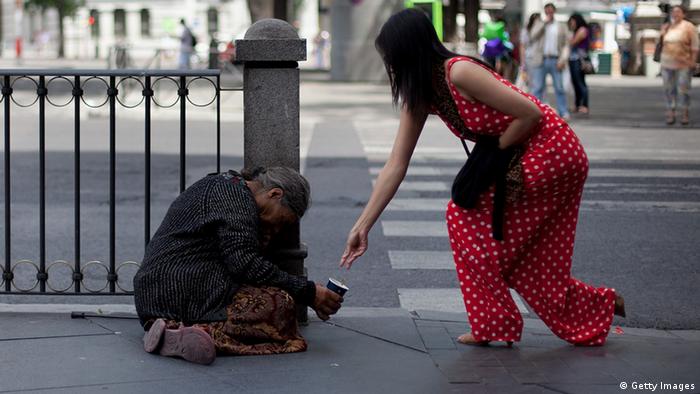 Limits to the welfare state? Poverty in Spain
To simply discuss European averages, does not get to the root of the problem - perhaps most disturbing is how the EU, and especially the eurozone, is splitting into a relatively stable north and an ever-declining south.
Take unemployment, for example. According to current figures from the European statistical authority Eurostat, Austria is experiencing unemployment at a rate of about 4.5 percent - compared to 26.6 percent in Spain, Europe's jobless frontrunner.
The situation looks even bleaker for youth in Spain and Greece, where more than every one in two lacks work - illustrating the gulf between individual nations.
According to Andor, the problem lies in poor or lacking qualifications. "In some countries, notably in the Southern part of Europe, the match between skills and jobs is bad and/or has worsened," Andor stated at a press conference about the report's findings.
Many states are experiencing a vicious cycle of unemployment, shrinking tax revenues, sinking investment, and recession leading to ever more unemployment. Other stressors that affect the development of children are the incarceration of children, alcoholism in the family. The government is working assiduously to compact the problems faced for the enrichment of their nation's children.
Retrieved on March 29,2013 from http://www.dw.de/poverty-is-on-the-rise-in-europe/a-16507641
Subscribe to:
Comments (Atom)